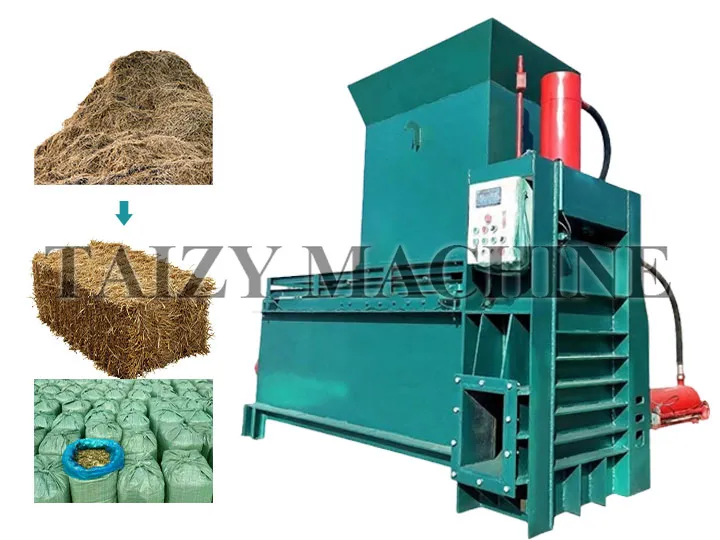
Corn silage baler
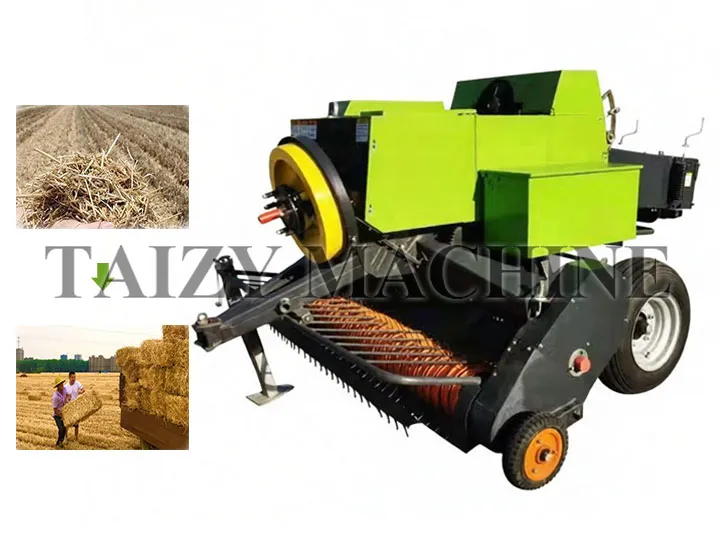
Square Hay Baling Machine with Double Bagging
Hay baling machine for hay, straw and silage. Hydraulic compression, square bales, double-layer bagging and customizable feeding options.

Corn silage baler
The bale wrapper is designed for the preservation of silage and hay, which can bale 45-60 silages per hour, with each bale weighing between 55-430 kg.
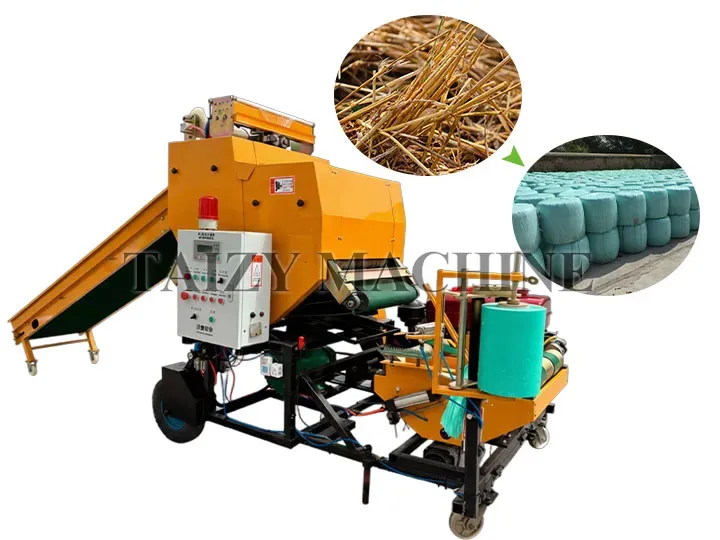
The corn silage bale wrapper is specifically designed for silage and haylage baling, offering stable, airtight packaging for round bales. It is suitable for bales sized φ550 × 520 mm with bale weights between 65 and 100 kg.
Its film wrapping speed can reach 50-65 bales/h with a film wrapping speed of 13s for 2-layer film, or 19s for 3-layer film, which significantly improves hay baling efficiency. It is widely popular in Thailand, Kenya, the USA, and other countries for silage preservation.
working video of silage packaging machine
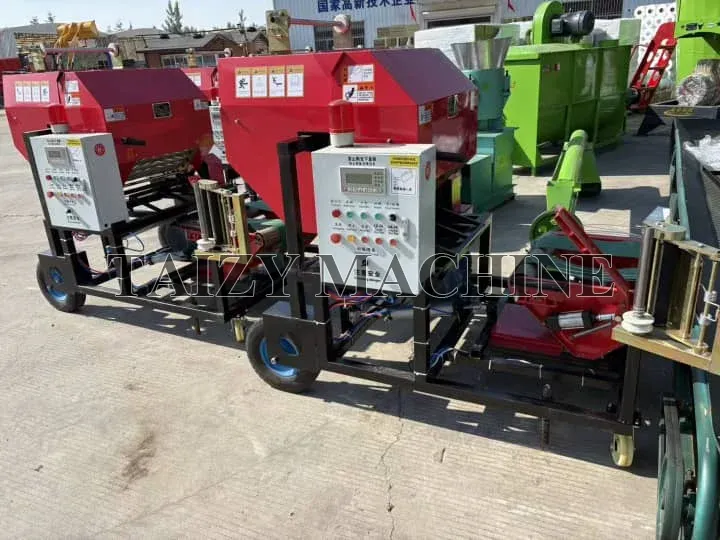
To meet the needs of high-intensity farm operations and different working environments, Taizy’s self-loading baling and wrapping machine has undergone a comprehensive upgrade in terms of structure, materials, and operational stability.
To meet the diverse needs of our customers, we offer a range of machine models to choose from. Below are some of our best-selling models and their specifications.
| Model | TZ 55-52 | 9YDB-55 |
| Bale speed | 50-60 pcs/h, 5-6 t/h | 50-65 pcs/h, 5-6 t/h |
| Package dimensions | φ550×520 mm | Φ550*520 mm |
| Package weight | 65-100 kg/bale | 65-100 kg/bale |
| Power | 5.5+0.55 kW | 5.5+0.55 kW |
| Number of coating layers | 2-6 | PLC regulation |
| Wrapping efficiency | 13 seconds/2 layers 19 seconds/3 layers (Per bundle) | 18 rings/2 layers 26 rings/3 layers 37 rings/4 layers (Per bundle) |
| Machine size | 3380*1370*1300 mm | 3500*1500*1600 mm |
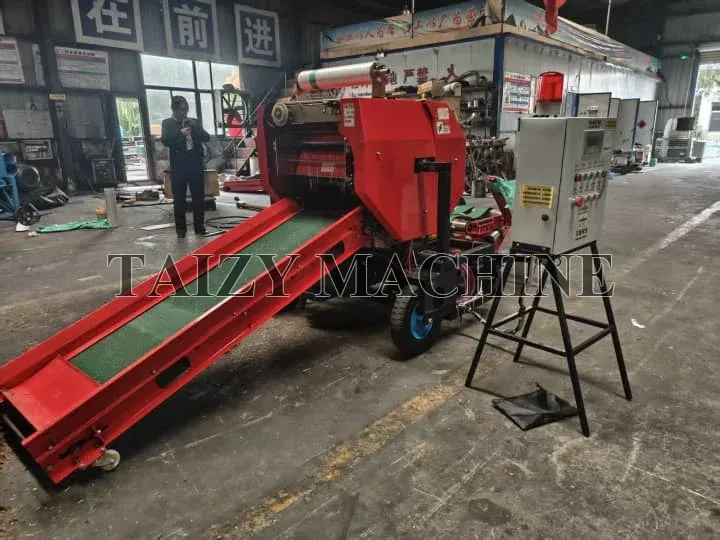
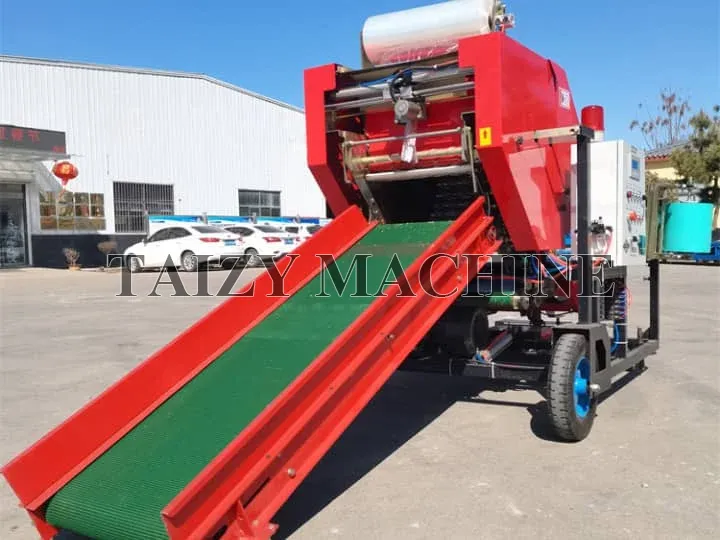
Different forage conditions require different baling and wrapping settings. Based on this, to allow our customers can use one machine for multiple purposes, our machine is designed to be flexibly adjusted according to forage length and bale structure.
Below is a guide for recommended twine turns and twine pulley selection based on forage length.
| Grass length condition | Proportion | Twine turns |
| 50–≤200 mm (mostly long grass) | 80% | 9–10 turns |
| 20–≤100 mm (short grass mixed) | 50% | 12–14 turns |
| Twine turns | Forage condition | Twine pulley |
| 12–14 | Short grass content is high | Large-diameter pulley |
| 9–10 | Long grass or dry hay | Small-diameter pulley |
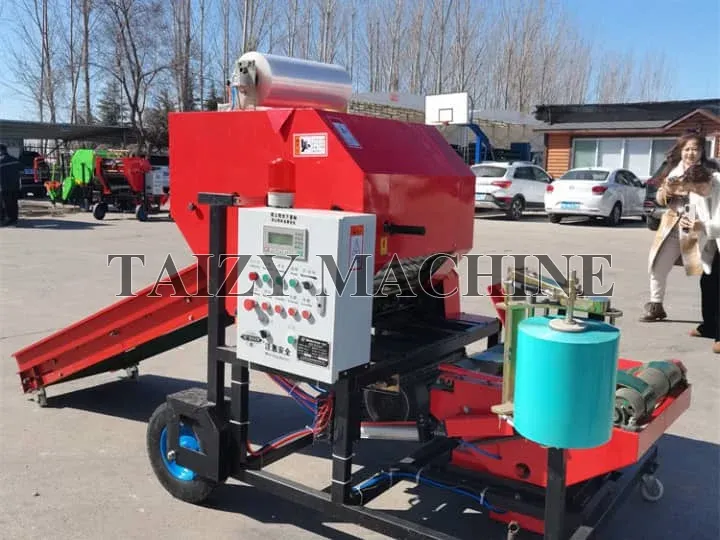
If you are unable to determine which configuration is best suited for you, you can send us your raw materials and requirements, and our sales team will provide you with the most professional assessment based on your specific needs.
Before the operation, the operator needs to assess the condition of the forage. It is also necessary to select the appropriate pulley diameter and the number of binding rope loops of the bale wrapper. The binding rope is then threaded through the rope guide system and the pulley.
Once the ropes are ready, the baling chamber needs to be closed and locked. The enclosed baling chamber provides a controlled space for the formation of the bale. This is the second step in the preparation process.
Its packaging system also needs to be ready before feeding begins. The stretch film must be installed onto the film holder with checking the film tension and the pre-stretching system. The number of wrapping layers (2, 3, 4, or 6 layers) needs to be preset by adjusting the half-turn controller.
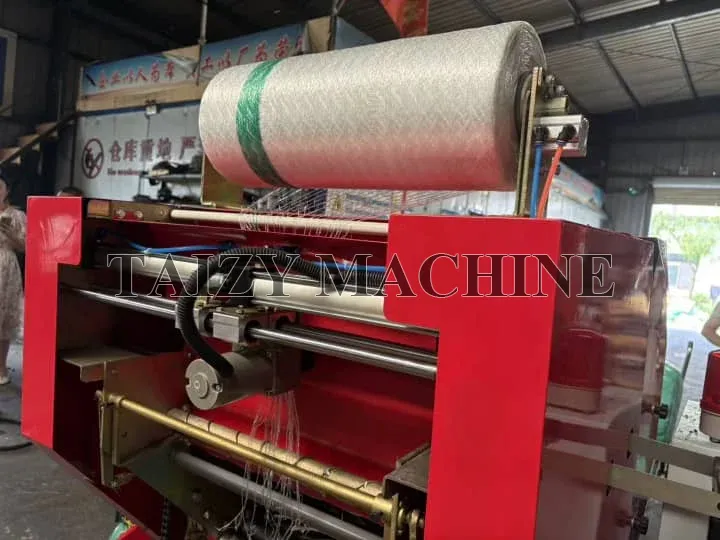
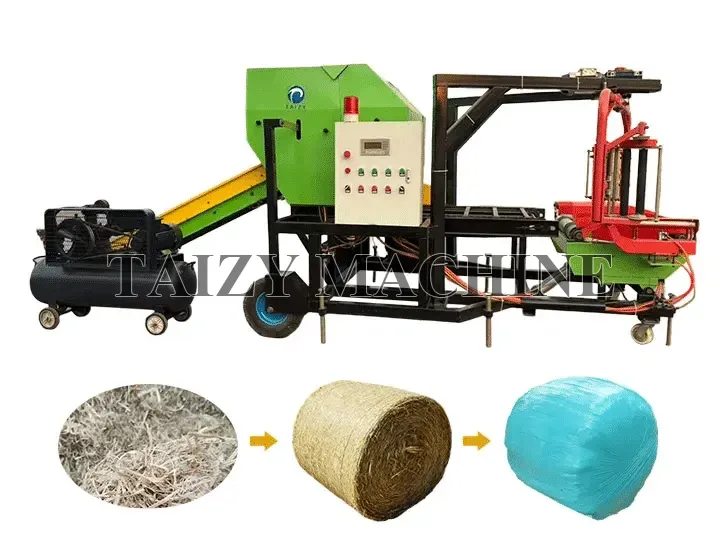
The principle of forage baling is very simple: Feed the materials evenly into the compaction chamber, and then the machine will rotate and compress the forage into a round bale. During this process, the density of the bale gradually increases until it reaches the preset size.
When the hay bale reaches the preset diameter and density, the machine will automatically emit an alarm signal, and soon the system will prepare to enter the baling stage. This alarm prevents overfilling and ensures consistent bale size.
The binding mechanism automatically wraps the binding twine evenly around the rotating bale, which secures the bale before the film wrapping process. Once the preset number of wraps is reached, the binding twine is automatically cut and prepared for the final film wrapping step.
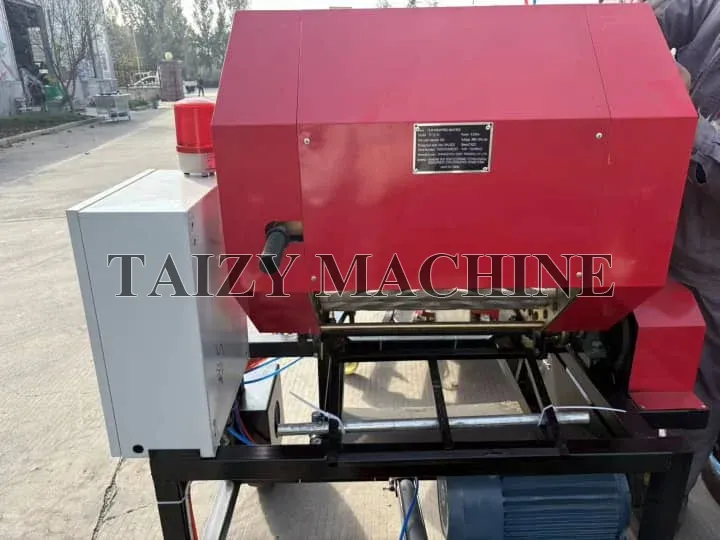
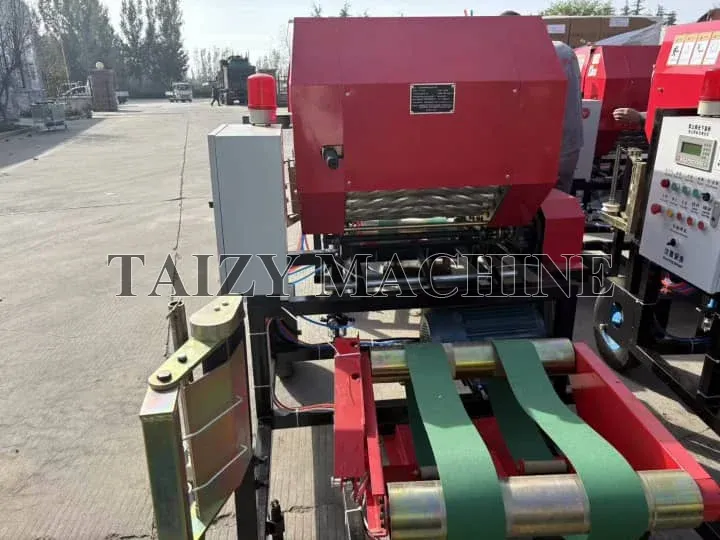
Inside the compaction chamber, finished hay bales are smoothly pushed onto the winding platform. Then, the stretch film begins to wrap the bales in the preset number of layers. Once winding is complete, the bales are completely sealed and ready for fermentation or transportation.
After the bale is fully discharged, the compaction chamber automatically resets, and the machine returns to the loading position, immediately starting the next baling cycle. This continuous workflow ensures high efficiency and stable output, even during peak harvesting periods.
In addition, our balers can be combined with other machines to form a fully automatic silage baling line. They can be used with silos for large-scale continuous baling, or with hay chopper s for integrated hay crushing and baling.
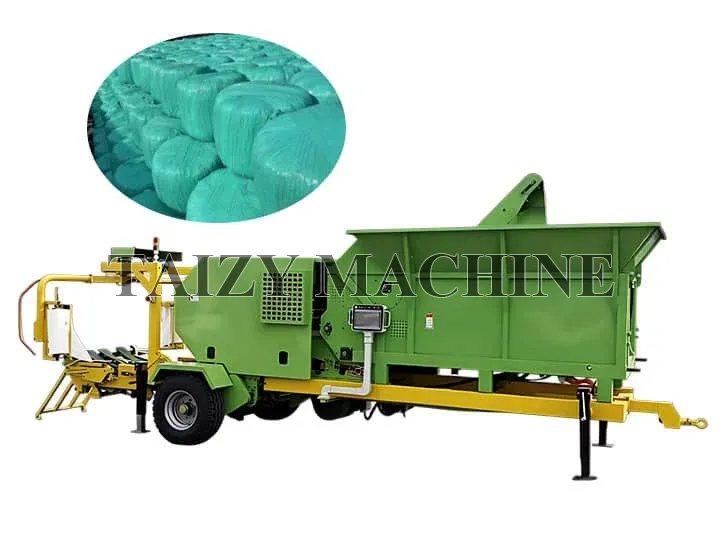
This system can be used in conjunction with silos to achieve large-scale, continuous feeding and baling of silage. Simultaneously, the silo feeding system effectively avoids the unstable production efficiency associated with manual feeding, significantly increasing baling speed.
corn silage baler with silos
When used in conjunction with a straw shredder, the baler forms an integrated shredding and baling solution, allowing raw feed materials to be shredded and baled in a continuous process. This improves material compaction, enhances fermentation quality, and reduces labor and processing time.
hay bale wrapper with silage chopper
Taizy helps customers in Burkina Faso develop their livestock industry, enabling them to not only store and use their high-quality silage locally but also transport and sell it to other regions. The baling and wrapping machine has significantly increased its profits from selling silage.
This batch of goods was ordered by a customer from Mexico who owns a large livestock farm and purchased this machine to facilitate the storage and transportation of fodder.
The distributor from Kenya decided to purchase another 5 baler-wrapper machines. This is our third collaboration. These baler-wrapper machines offer excellent value for money, produce high-quality bales, and are very popular locally.
Contact us for the latest quote. If you have any ordering requirements or questions about the machine, please consult us.
Corn silage baler
Hay baling machine for hay, straw and silage. Hydraulic compression, square bales, double-layer bagging and customizable feeding options.
Corn silage baler
Square hay baler machine efficiently compresses hay, straw, and crop residues into uniform bales, reducing labor costs and improving farm productivity.
Corn silage baler
The silage bale wrapper is capable of both baling and wrapping silage, offering high efficiency with an output of 50 to 70 bales per hour. The bale measures 60 x 52 cm and weighs between 75 and 110 kg.
Corn silage baler
This efficient integrated hay baler silage machine combines automatic feeding, baling, and wrapping functions with capable of producing 55-60 bales per hour.
Corn silage baler
The latest corn silage baler features a double baling system with the production capacity of 50-75 bales/hour and the carrying capacity of 90-200 kg/bale.